Garhwali vs Kumaoni Nath: how to tell them apart, and which to wear
The two regions of Uttarakhand wear the nath differently. Here is what actually separates them — motif, size and the way the weight is carried.
The short answer
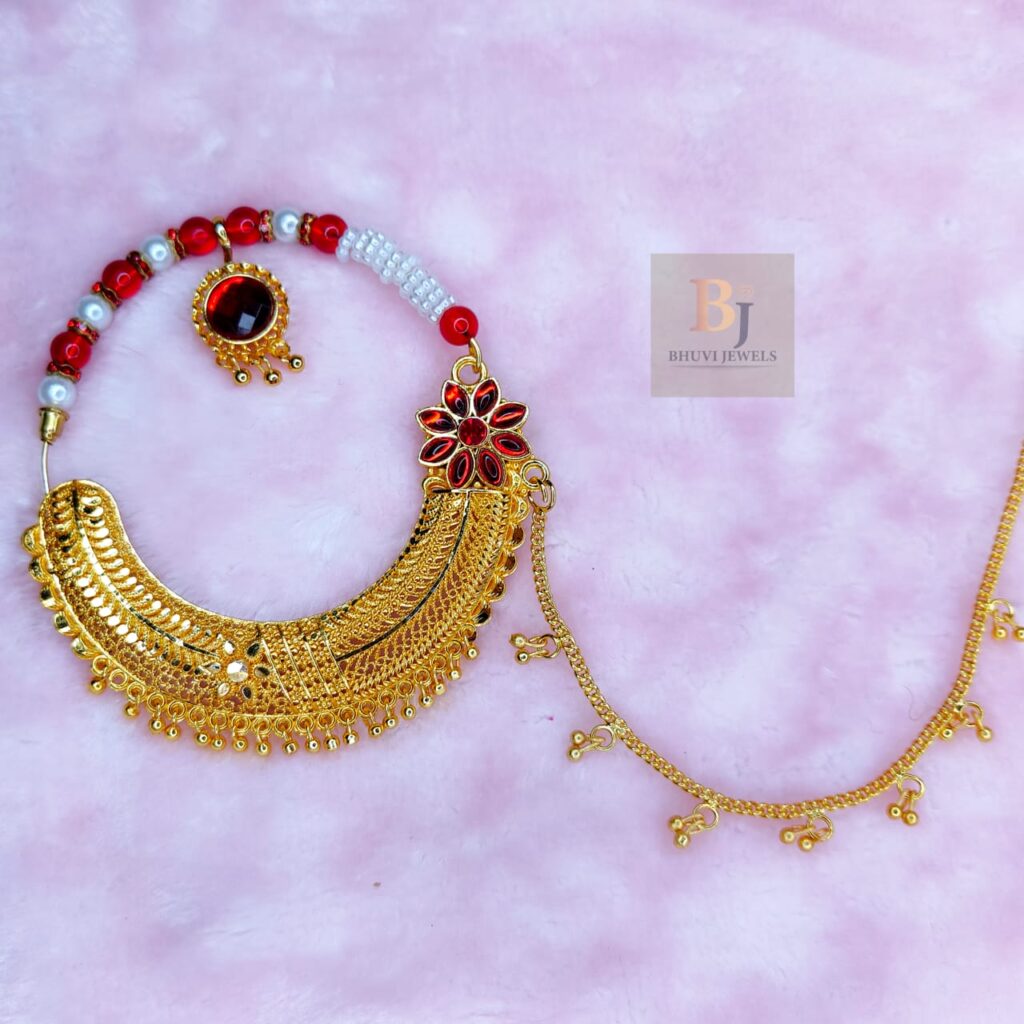
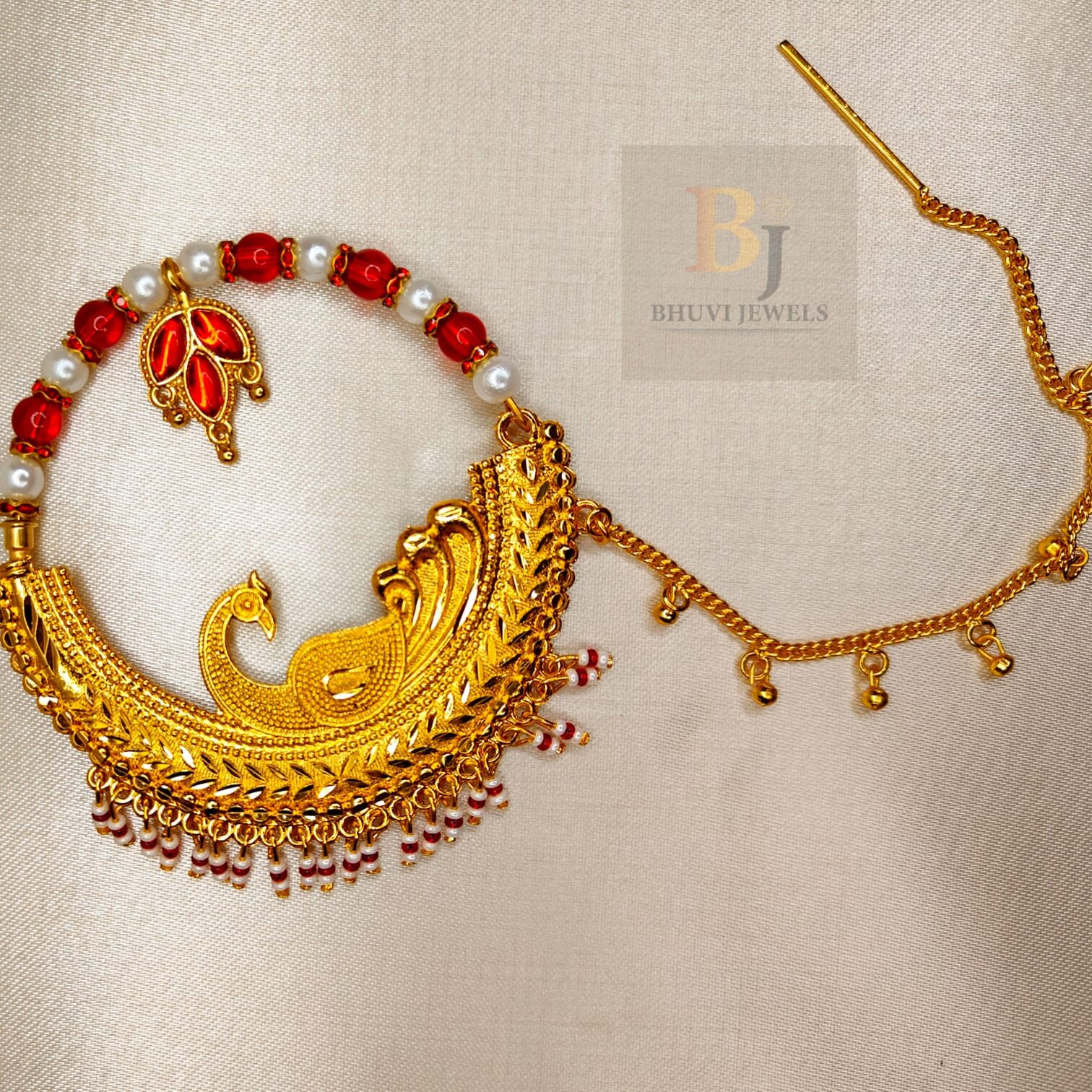
Kumaoni naths lean on the peacock (mayuri) motif and tend to be worn very large, with a support chain running to the hair. Garhwali naths favour floral clusters and the swastik, and are commonly a little smaller in diameter but heavier in stone work. Both are worn on the left nostril.
Size is a decision, not a default
The instinct is to buy the biggest nath available, because that is what appears in wedding photographs. In practice size should follow the occasion. A bride wears the full hoop. A guest at the same wedding is better served by a small mayuri nath — it reads traditional without pulling focus, and it does not need a support chain.
As a rough guide: 25–30 g for a bride, 16–24 g for close family, and 10–14 g for a guest, a day function or an office festival.
The support chain is the whole game
Anything above roughly 20 grams needs the weight taken off the piercing. The chain hooks into the hair above the ear and carries most of the load. Attach it before you let go of the nath, not after — this is the single most common mistake, and it is how piercings get torn.
Material, honestly
Traditional naths were gold. Most families now keep the gold piece safe and wear gold-polished brass to the actual function. Polished brass holds colour far better than thin electroplate, and it is nickel-free, which matters for a piece that sits against a healing or sensitive piercing.
How to build the rest of the look
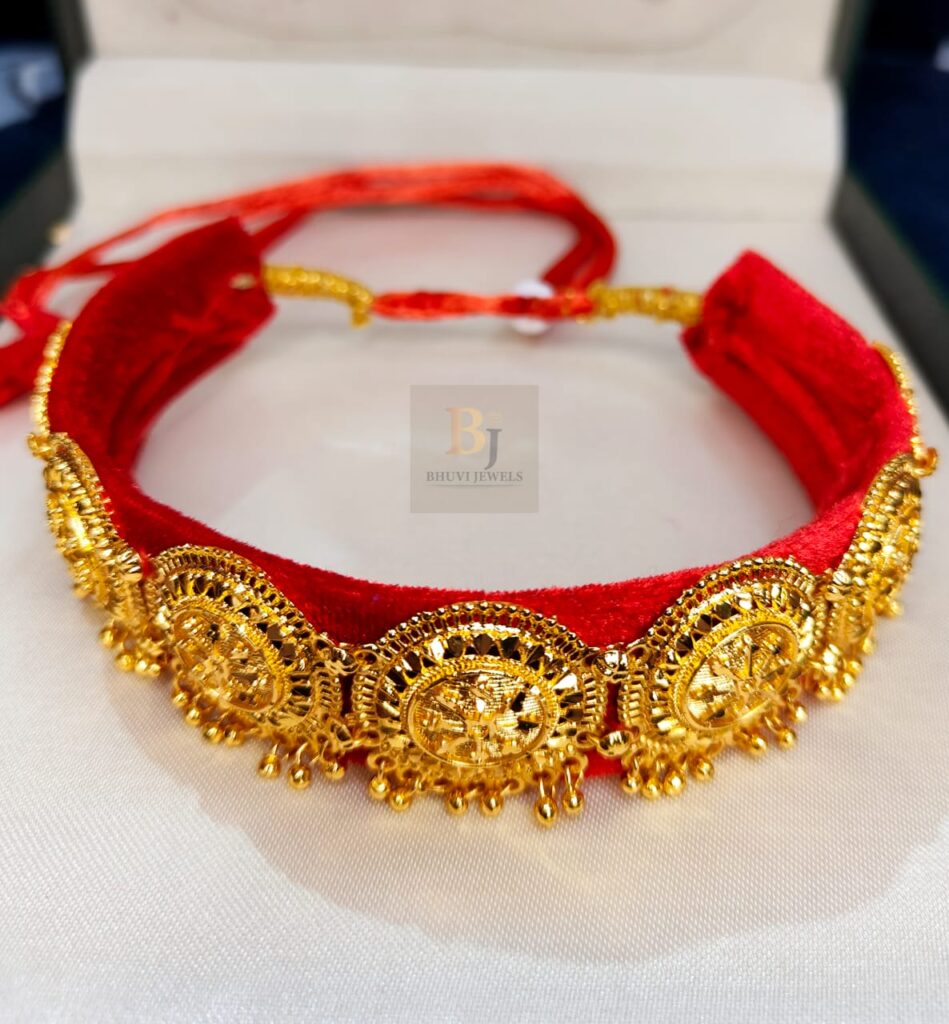
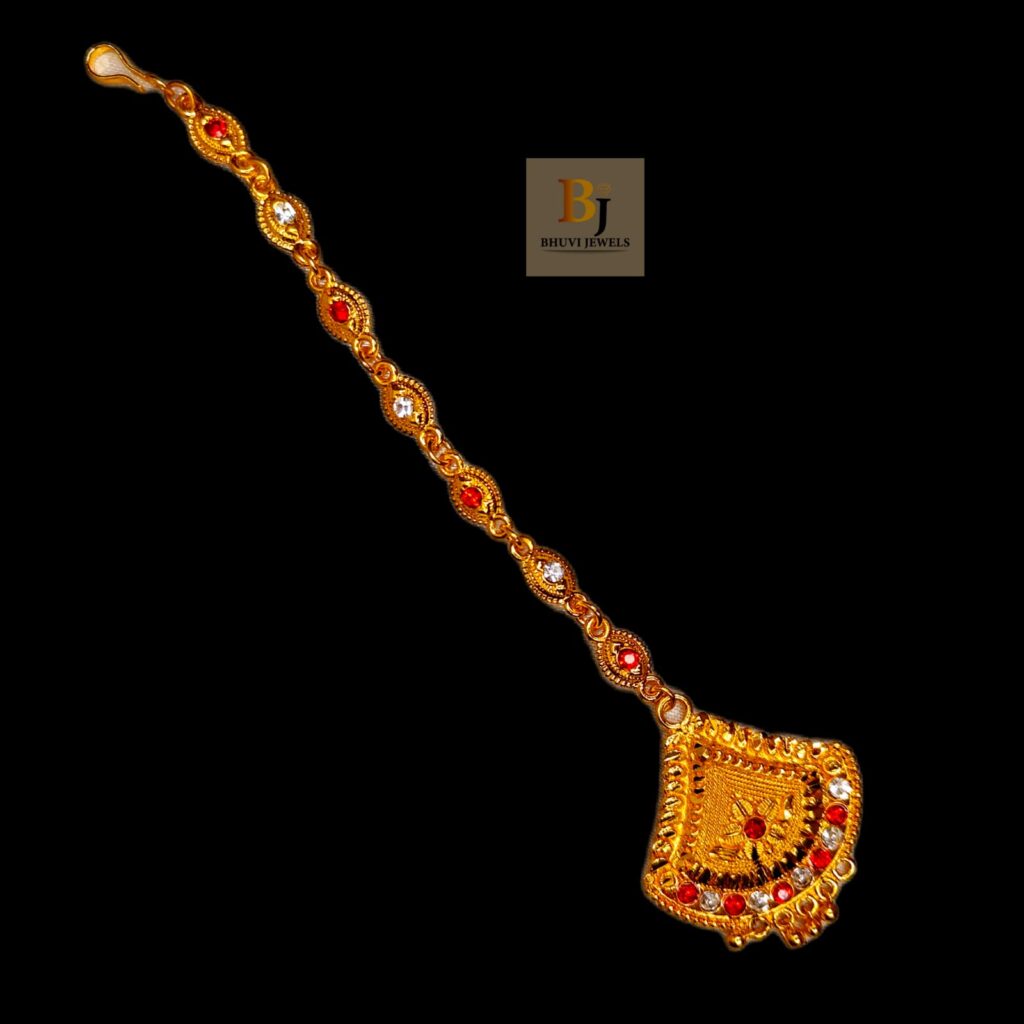
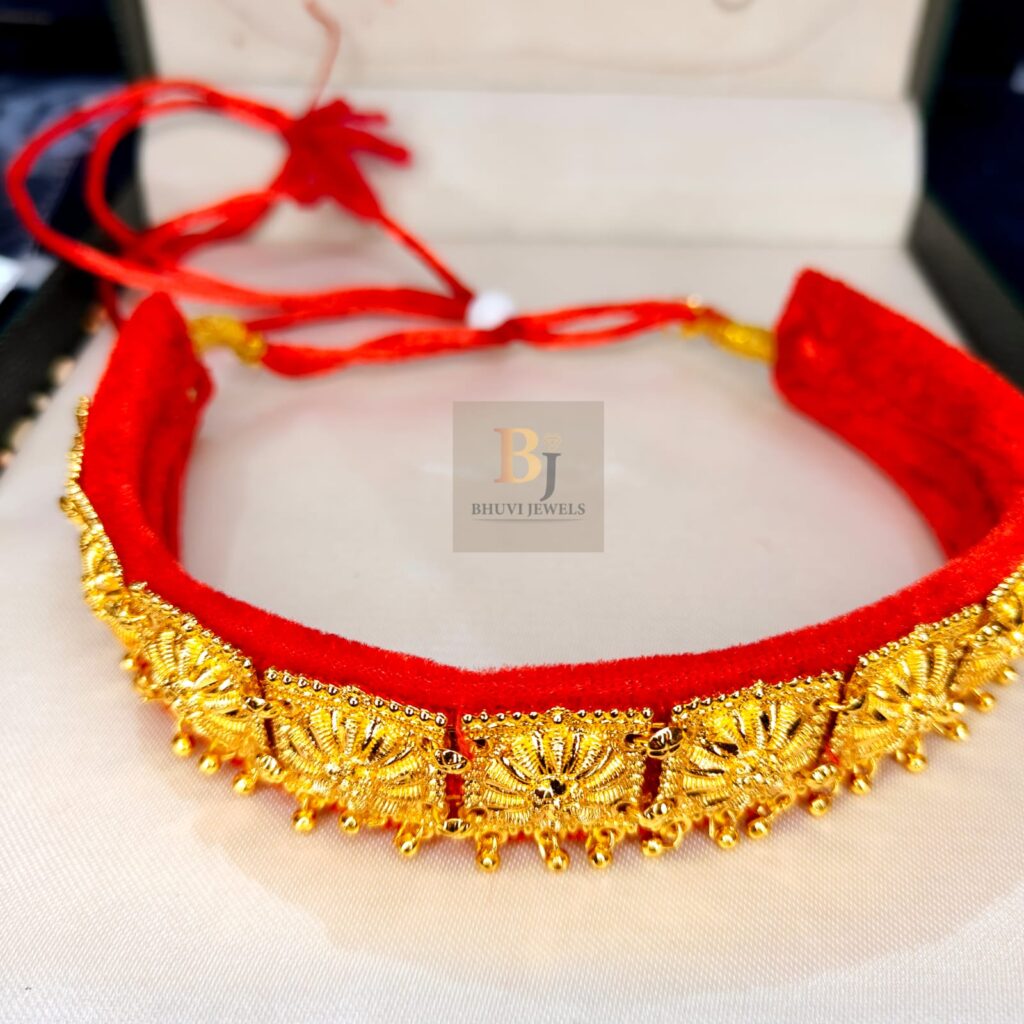
A large nath wants a simple maang tikka beside it. A small nath can carry a heavier tikka and a wide guloband. The rule is that one piece leads and the others support — a full set of statement pieces reads cluttered in photographs.
Shop the pieces in this guide: Nath · Guloband · Maang Tikka · Mangalsutra · Earrings